From preventing DVTs to providing soothing comfort for all of your sore and achy muscles, the right amount of pressure can make a world of difference in your next workout or while you walk. Ask us which compression garments and level of compression is right for finding sweet relief for your next run. Whether you are looking for socks, stockings, or arm sleeves, Northside Medical Supply has the best brands at affordable prices.
Anti-Embolism, TEDs
Learn About Medical Grade Compression Hosiery
Medical Grade Compression socks, stockings or panty hose are generally recommended by your physician or therapist when your legs appear swollen as a result of venous edema and lymphatic disorders.
Chronic edema occurs when a damaged or poorly closing valve in a vein of the leg allows blood to flow backwards. This can cause blood to back up and collect in the veins of the lower leg. This causes swelling, especially near the ankles and calves, which can lead to complications such as enlarged veins, blood clots (also called deep vein thrombosis—DVT), swelling, chronic venous insufficiency (CVI) and venous ulcers.
Medical Grade Compression socks and stockings have gradient compression that help return blood to the heart by compressing (squeezing) the leg muscles. Gently squeezing the veins helps to push blood in the right direction. “Gradient compression” means that the amount of compression in the stocking gradually changes—the highest amount of pressure occurs at the ankle and gradually decreases up the length of the stocking
Choosing the correct compression strength
We have been serving Metro Atlanta and Georgia communities for over 15 years. At Northside Medical Supply we understand that living with certain medical conditions or recovering from injuries and surgeries can be difficult to manage.
We understand that shopping for specialty products can be frustrating. With this in mind, our trained and experienced staff will help you find the right solution for managing your condition and regaining your independence. We provide quality care and a wide range of medical products and equipment in a comfortable professional setting. Our valued customers include individuals, medical professionals, physical therapist, caregivers and independent and assisted living facilities. Northside Medical Supply is accredited by The Joint Commission and is Medicare-approved.
PRESSURE
LEVEL OF SUPPORT
INDICATION
< 15mmHgMinimal Asymptomatic individuals as needed for comfort 15-20mmHgMildMinor varicosities; tired aching legs, minor swelling of ankles, legs or feet20-30mmHgModerateModerate to severe varicosities, moderate swelling, phlebitis following vein ablation30-40mmHg
Firm
Severe varicosities, severe swelling, management of active ulceration following deep vein thrombosis, post-surgery
8–15 mmHg —Minimal.
For minor or occasional swelling. These products provide a little extra support for those who spend a lot of time on their feet.
15–20 mmHg—Mild
A low level of compression, such as 15–20 mmHg, is a great choice for everyday compression stockings to help with mild swelling and fatigued legs due to long periods of travel, sitting or standing.
20–30 mmHg— Moderate.
This is the most widely used medical grade because it provides competent compression to the legs without being too strong. The 20–30 mmHg level of compression is ideal for managing swelling in legs, spider veins, varicose veins, travel, sports, and after certain surgeries. Pregnant mothers may also benefit from compression stockings to alleviate heaviness, swelling, and aching in their legs.
30–40 mmHg—Firm.
This stronger compression level is recommended for leg health symptoms that range from moderate to severe. The 30–40 mmHg level of compression is recommended for patients with a blood clot, deep vein thrombosis (DVT), or lymphedema. Because the stocking provides more compression, it’s a good idea to choose a more durable material.
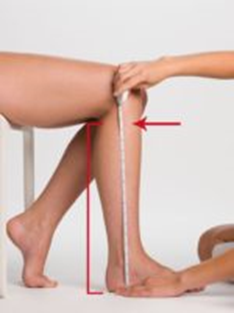
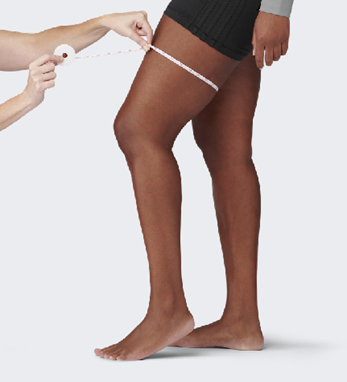
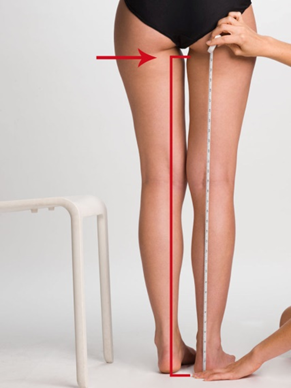
How to Measure for Compression Knee and Thigh High Stockings
- It is critical to get measured for your compression stockings. Wearing the wrong size can cause pressure sores and prevent stocking effectiveness.
- Take measurements in the morning when swelling is lowest. If not in the morning, elevate feet for 30 minutes before measuring
- Always measure each patient and both legs
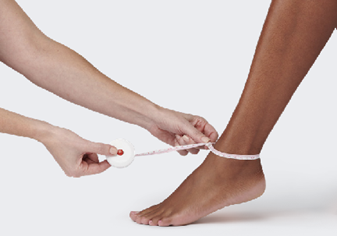
1. Measure around the ankle
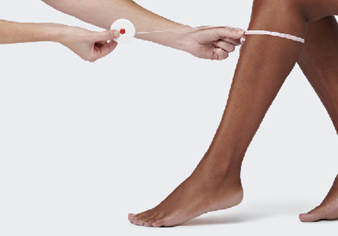
2. Measure around the widest part of the calf
3. Measure from the base of your foot to just below your knee.